
A deep assumption that drives maladaptive behavior and bad business decisions in managers is that the organization plays by the substitution rules of baseball (or world football). Once you are taken out of the game, you are permanently out. This belief causes a manager to have an overly self-invested view of his or her charter. Your product or technology – as currently organized – becomes the most important thing on earth! If your career is, in effect, tied to that belief, then it is actually a matter of personal survival, and you start to sound to others like a turf-protecting, near-sighted self-promoter.
During a re-org, we use language like “who’s out.” When “out” equals irrelevance forever, the re-org is no longer about adapting to technology and the business, but entirely about personal winners and losers. Such a mindset can drag down the morale of the entire organization.

Stars on the Bench
Under the rules of basketball (hockey, North American football), free substitution is permitted and expected. Even the stars go to the bench once in a while. Players (managers) go into the game according to the situation and their unique strengths, or sometimes just to give others a rest. Most importantly, they fully expect to go back into the game, maybe even in a somewhat different position/role. Versatility is highly valued. Some players even signal that they need to come out of the game temporarily. At that point the blinders are off and you are free and trusted to make the best decisions for the business and the larger group.
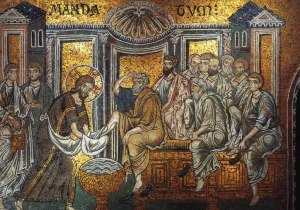 Leadership is very ego inflationary and needs to be consciously regulated or it will get out of control. The most ego-centric organizational leader focuses attention directly and exclusively on HIS/HER charter or mandate. If the charter succeeds (defined by some combination of perception and metrics) then I succeed. The staff who report to ME is the force at MY disposal to accomplish MY charter. I complain when my force is too small for MY charter and seek more charter when I have, or can obtain, extra force. Given these concerns, I mostly manage laterally and upward. I address MY force when I want to exercise MY power – either to reshape them or change their direction.
 Difficult co-workers are running their “programs for comfort” (to paraphrase Thomas Keating) with too much priority. We are all running one of these “daemons,” but in the best case, they share urgency with the classic, cardinal virtues: prudence, justice, temperance and courage. Keating identifies the daemons as 1) safety and security, 2) power and control, and 3) affection and esteem. They define our comfort zones everywhere, but especially at work where our egos typically have the most to gain and the most to lose.
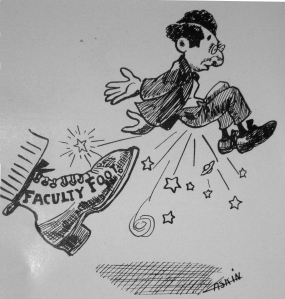 Few careers follow a linear path of ascent until some self-selected retirement age, whereupon leisure compensates for any hardship or drudgery one had to endure along the way. Whether it is a layoff or a related interrupt (re-org, re-assignment, loss of responsibility, dismissal), your run of success likely will not last. Any number of personal shifts or environmental conditions can throw you out of your saddle. Perhaps the most insidious precipitant is that your long-followed path (profession, field, domain, goal) no longer has the same meaning for you. You even want to volunteer for the layoff.
 Seeking Union