Marriage Requires Accommodation

If we have been trusted to look at the depth of our partners’ wounds and through empathy touch their pain, we cannot help but be moved to compassion (unless we are completely blinded and numbed by our own pain). Without a compassionate response, your partner will immediately retreat behind old defenses and you probably won’t get a second chance. Assuming that your heart can look outward, what is your next move?
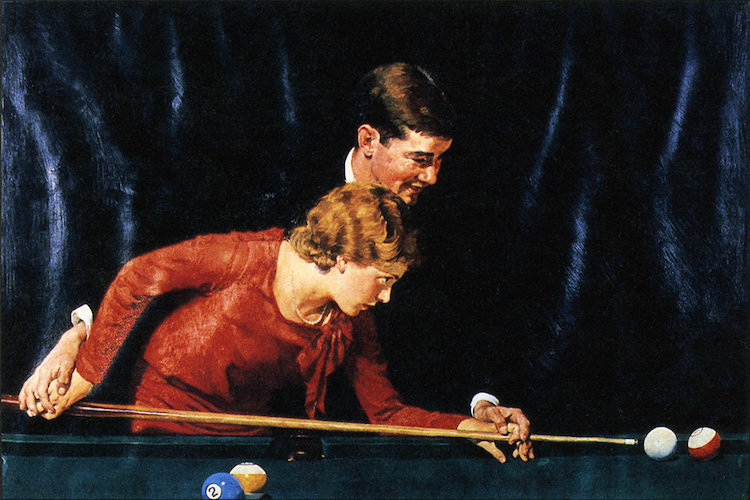
billiards is easy to learn

Billiards Is Easy To Learn – Norman Rockwell, 1920

Here are some thoughts leading to responses that are not going to work:

  • Eureka!, I thought. She finally admitted that it is her problem. I knew I was right!
  • Now he has to change and he knows it.
  • I’ll do everything I can to help her fix that problem.
  • Poor thing. I guess I’ll give him another chance.

A better idea is to participate and reciprocate, as in:

  • Gosh, if we’re being that honest here, I could share a few things.

Seeing Through the Heart Space

Still, a direct response to your spouse’s wounds is invited. Empathetic acknowledgement is the action in the moment. Beyond that, do understand that these wounds likely have roots in childhood and are not disappearing anytime soon, if ever. Your partner’s radical change is not right around the corner. The difference in your relationship is that you now have the interpretive key for his or her out-sized defenses and aggression. With this key, you can take less offense, dampen irritation and stay cool, for more of the world’s pain is caused by taking offense rather than by giving offense. Remind yourself that what is really happening is that his/her wounds are crying out and then recall the innocent one who received them and the powerless one who confessed them.

Accommodation Is an Act of Mercy

Then you make a series of accommodations. The word means “towards a fit.” You go out of your way to avoid the irritants and positions that are uncomfortable for your spouse’s wounds. You exercise greater patience. You act this way not because of any requirement of fairness or honor. You accommodate as an act of mercy. It is needed, so you provide it, with no expectation of recompense. Henri Nouwen wrote of healing friendship:

When we honestly ask ourselves which person in our lives mean the most to us, we often find that it is those who, instead of giving advice, solutions, or cures, have chosen rather to share our pain and touch our wounds with a warm and tender hand. The friend who can be silent with us in a moment of despair or confusion, who can stay with us in an hour of grief and bereavement, who can tolerate not knowing, not curing, not healing and face with us the reality of our powerlessness, that is a friend who cares.

You want to be that friend for your beloved.
Marriage Conflict: Vulnerability is Disarming

I am unhappy with my spouse. At best I am disappointed and at worst I am fully ticked off. The tender support of a loving partner that I imagined in the beginning isn’t happening. Our relationship “isn’t working out,” to say the least. I still can’t believe that anybody, let alone the person who claims to love me, could be so cold and even callous in ignoring my needs. On top of that, some the behaviors I see repeatedly, some of things that are said, are just not right, not for a sensible adult, and at times they are simply mean. If I say anything it gets thrown back in my face – all my fault.

In the struggle of life, I find myself in the cruelly ironic position that my own spouse is against me, not for me. Is what I’m feeling closer to love or hate?

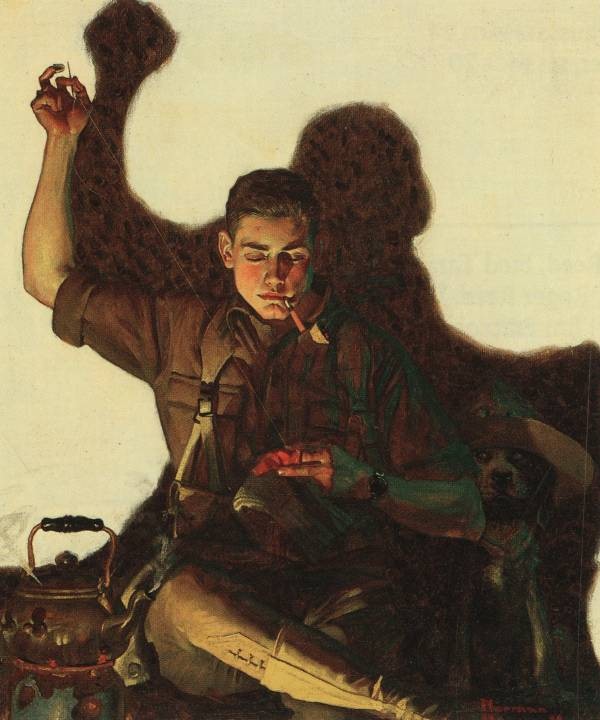
if only mother could see me now

If Only Mother Could See Me Now – Norman Rockwell, 1918

One day my spouse “wants to talk.” I expect the usual litany of my faults and shortcomings. Already my blood pressure is rising. But within seconds I realize that it’s a very different kind of talk. I’m not offended; in fact it’s not even about me. Not an apology, but a kind of confession. I hear about fear, anxiety, self-doubt, and shame – things that go back a long time, even before we met. There is some acknowledgement that my needs are real along with an admission that the strength and skill to respond is just not there. What I think should be automatic is actually very hard without any training, any early example to follow.

This talk feels very honest and very sad. And I suddenly find myself seeing my spouse with new eyes. I just can’t be angry with this miserable person right now. All my standard defenses and counter-arguments seem pointless and inappropriate. I’m disarmed. Instead I actually feel a tinge of sorrow for the raw vulnerability that I’m hearing – a first moment of compassion.

Marriage Intimacy: Exposing Your Wounds

Marriage intimacy (into-me-see) is of two parts: acknowledging your own wounds (shadow self, character flaws) and daring to expose them to your partner. Until you have seen the other’s shadow, you do not know him/her, and it is unwise to marry someone unknown. In fact, this is the best answer to the perennial question of how long is long enough to be in relationship before committing to marriage: until you’ve seen it all. The shadow self is always the last to emerge, despite best efforts to hide or deny it forever.

girl-reading-palm-1921

Girl Reading Palm – Norman Rockwell – 1921

First things first, however. There is nothing to own and share that you do not first see in yourself. One sacred text calls it “the plank in your eye.” Marriage aside, any progress in personal or spiritual growth starts here. Think of Socrates’ axiom on the unexamined life. Yet rigorous honesty with oneself is very difficult. Your ego has to be strong enough to survive the come-down without crumbling and humble enough not to veto the entire project. Ordinarily, we would defend against such critiques, especially when they come from outside. The key is to stop playing the worthiness game. Your worthiness cannot be a character judgment (by anybody); it has to come from something larger and/or more intrinsic. Some call it grace.

The second step is also not automatic. Disclosing the nature of your woundedness is a risk, a dare. The central question is – will your partner be a safe guest inside your tender truth? Vulnerability refers not to the wounds revealed but to the possibility of new ones. The trouble for many couples is that one or both partners are not safe. Safety in this context means listening without judgment, without righteousness and without exploitation. To grow in intimacy is to slowly reveal yourselves to each other, building trust along the way. One threatening response can set you back a long way.

The opposite of intimacy is estrangement. All of your problems are external, “over there,” in your partner, who is simultaneously thinking the same way. Marriage becomes a scapegoat system rather than a support system. We get married to have a very close-in support system, for which intimacy is not just an asset, but a pre-condition.

Divorce First Aid

There is the first to know and then there is the second to know. This note is for the one who did not see it coming, or hoped that it would pass.

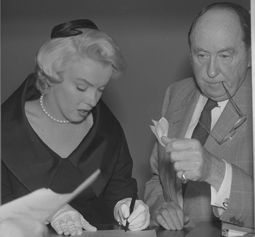
Marilyn_Monroe_and_Jerry_Giesler_3

Marilyn Monroe with a representative of Joe DiMaggio

Divorce is premature death, a marriage succumbing to a fatal disease. The funeral arrangements can take a very long time and the burial occurs in a court of law, but the emotional work closely follows the death of a person. Divorce results in a bereavement whose severity is proportional to the importance of the relationship. When your home, dreams for the future, desire for intimacy, support system and family are all built on that one relationship, it is very important indeed.

Elisabeth Kübler-Ross’s stages of dying have been applied to grief and here they indicate the major attitudes and emotions in the wake of divorce:

  • Denial – It is not happening. S/he did not really mean “over.” Wait for the retraction.
  • Anger – How dare s/he make me feel this bad!
  • Bargaining – I’ll change. What will it take for him/her to call this off?
  • Depression – My life is crushed and nothing is enjoyable.
  • Acceptance – I am starting to think about how to live again.

First Aid Kit

Your divorce first aid kit contains only the bandages and ointments needed to stabilize your heart and carry you through the initial grief process. Recovery launches from “acceptance” above and is a much longer journey. Here are some suggestions for your kit:

  • a separation plan, especially for children and bills
  • a place to “lay your head” (and those of your children), however small or humble
  • two safe (confidential, nonjudgmental) friends with ample time to listen
  • ample time to weep and rest your body
  • a recommitment to exercise and nutrition
  • a lawyer who specializes in family law
  • an indefinite ban on romance
  • patience with yourself

Marriage Is a Union of Two Wounded People

We are all wounded people. The hurts, frustrations and their compensatory character traits were already baked in as early as age 4, when ego identity began to emerge. They were the inevitable product of an imperfect human genome, wounded human parents and wounded human culture. If there was any trauma involved, stressful or catastrophic, multiply by 10 (95% of families, according to one expert). This is the real, messed-up person who you “gave” and “took” in marriage. There are no other kind.

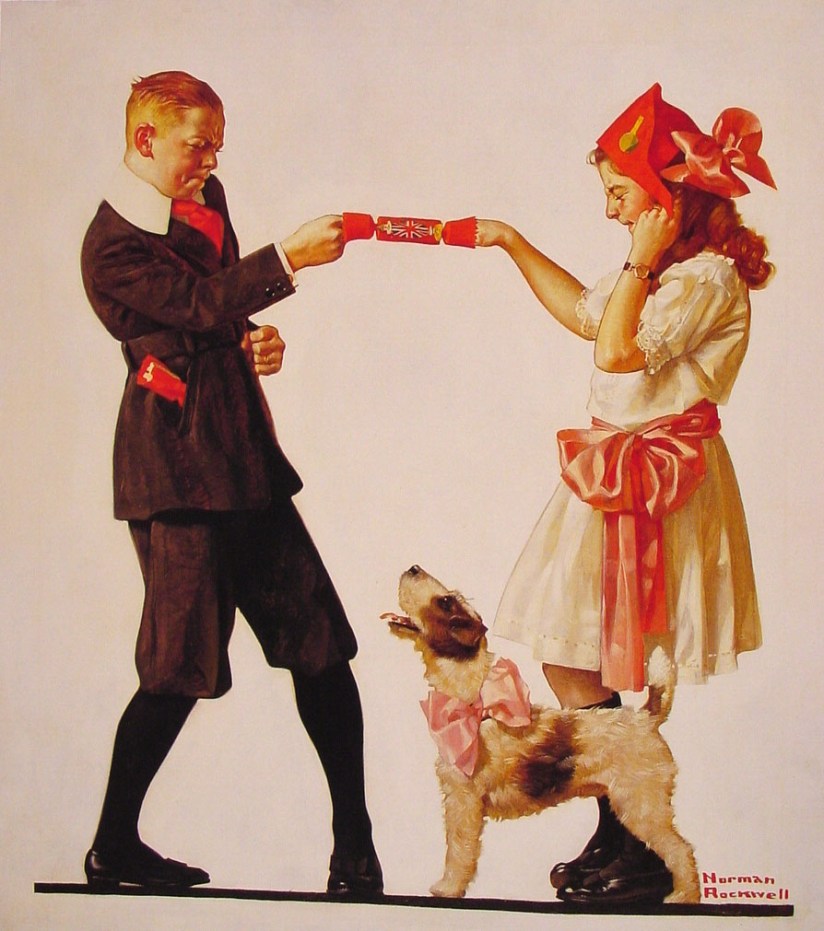
the-party-favour-1919

The Party Favor – Norman Rockwell – 1919

Most couples live in denial of this foundational picture. Their working theory is that their partners were great when the relationship began but then began behaving badly later. Part of the problem is that we tend to see our strengths (areas where we are healthy) as normative for all. “This is not a problem for me. How could it be a problem for you?” Then we are blind to our own weaknesses because our egos are too fragile to look at them. Our partners can look at them just fine.

Until we can examine ourselves with radical honesty and humility, we have no chance to grow in love. Loving your own ego ideal projected onto another person is neither human nor divine love. Simply, it is not love, but enchantment (making beautiful music together), or idolatry, neither of which is not going to sustain a marriage past the honeymoon. You have to go much further; you have to be able to acknowledge the wounds and embrace the whole person.

To expose one’s wounds is to be vulnerable (Latin vulnus is “wound”). Nobody with a pulse is going to be vulnerable if they are going to be attacked or rejected. Thus, the first question in a marriage is a personal one: Can you acknowledge your own wounds and still hold yourself together in dignity as a person worthy of love? Loving yourself, a significant other, others and the Other is all one project. Take the simple case first.

Marriage Quarrels: The Issue Is Never The Issue

The biggest communication problem between couples is not a matter of technique or style. It is the subject matter. Attachment partners will argue about the most trivial of conflicts and criticize each other on the most innocuous of behaviors. They will do so aggressively in a range from blazing anger to eye rolls, or passively through disregard and non-cooperation. They attack and defend or counter-attack. Across a history of surface issues, patterns are found – “You never …” – more persuasive arguments.

the debate - 1920

Man and Woman Seated Back to Back, Norman Rockwell, 1920

Where is justice to be found? Who is right and who has been wronged? It does not matter. No, not one bit. The apparent issue is not The Real Issue. The much argued subject is merely the stage for crying over old bruises and creating new ones. You can spend hours and lots of money with a marriage counselor adjudicating each bruise.

Trivial conflicts and innocuous behaviors cannot create the kind of energy that is required for years of these superficial dramas. Pain energy of this magnitude comes from The Real Issue, which is not getting your attachment needs met (and not being able to meet the same needs of your partner). To simplify, consider affirmation, encouragement and consolation as three primary attachment needs. You only demand them from your attachment figure. The first such figure was your primary caregiver. Part of the excitement and limerance of marriage comes from the promise of securing a new and permanent attachment figure.

When the adult attachment figure does not deliver the goods you are disappointed and disillusioned at best,  crushed and desperate at worst. You hold that pain and it festers. Some momentary relief comes through anger (or numbing, denial, affairs, etc., etc.) and any little irritant can get the emotional pain energy flowing. A new quarrel begins.

How Can We Get Out of This Cycle?

If you could quarrel about The Real Issue, that would be a lot of progress. At least your energy would not be complete wasted. Better would be not to quarrel at all and see the tragedy of your deeper wounds and those of your partner through the eyes of your heart. It sucks not to have your attachment needs met. Too often they were not met in childhood either and that is an even bigger tragedy. How was this flawed person before you trained to affirm, encourage and console? Is that his/her fault?